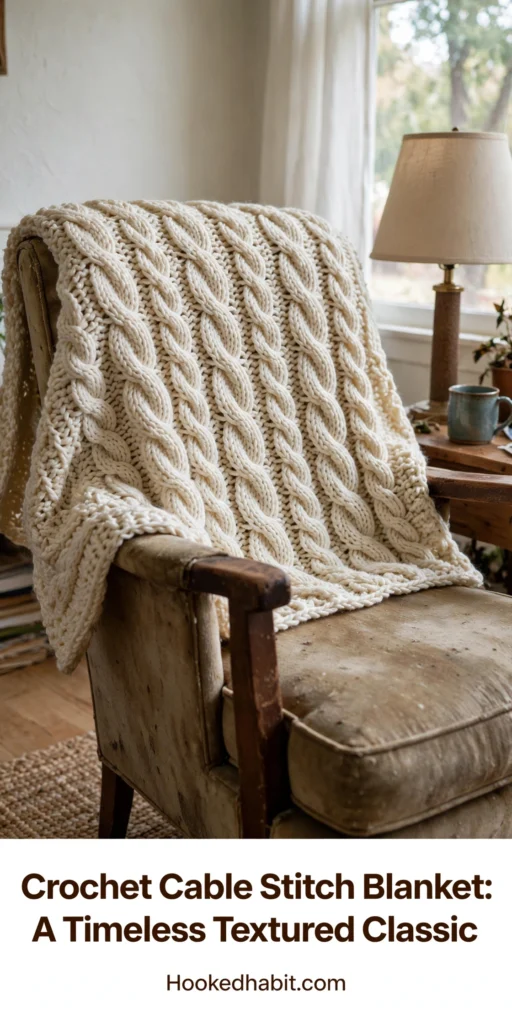
There’s nothing quite like a cable stitch blanket to make a house feel like a home. All those cozy twists rising up from the fabric — it’s the kind of texture that makes you want to curl up with a cup of tea and stay put for a while. This one is made for slow, unhurried afternoons.
The Cable Stitch Blanket
This is the blanket you’ll drape over the back of your favorite armchair or fold at the foot of the bed — the one guests always reach out to touch. Those twisted cables give the fabric such a lovely, sculptural feel: airy but substantial, with ridges your fingers will want to follow. It’s a wonderful weekend project for a seasoned crocheter, and a very doable stretch for a confident beginner ready to try something beyond flat stitches. Best of all, it looks far fancier than the hours it actually asks of you.
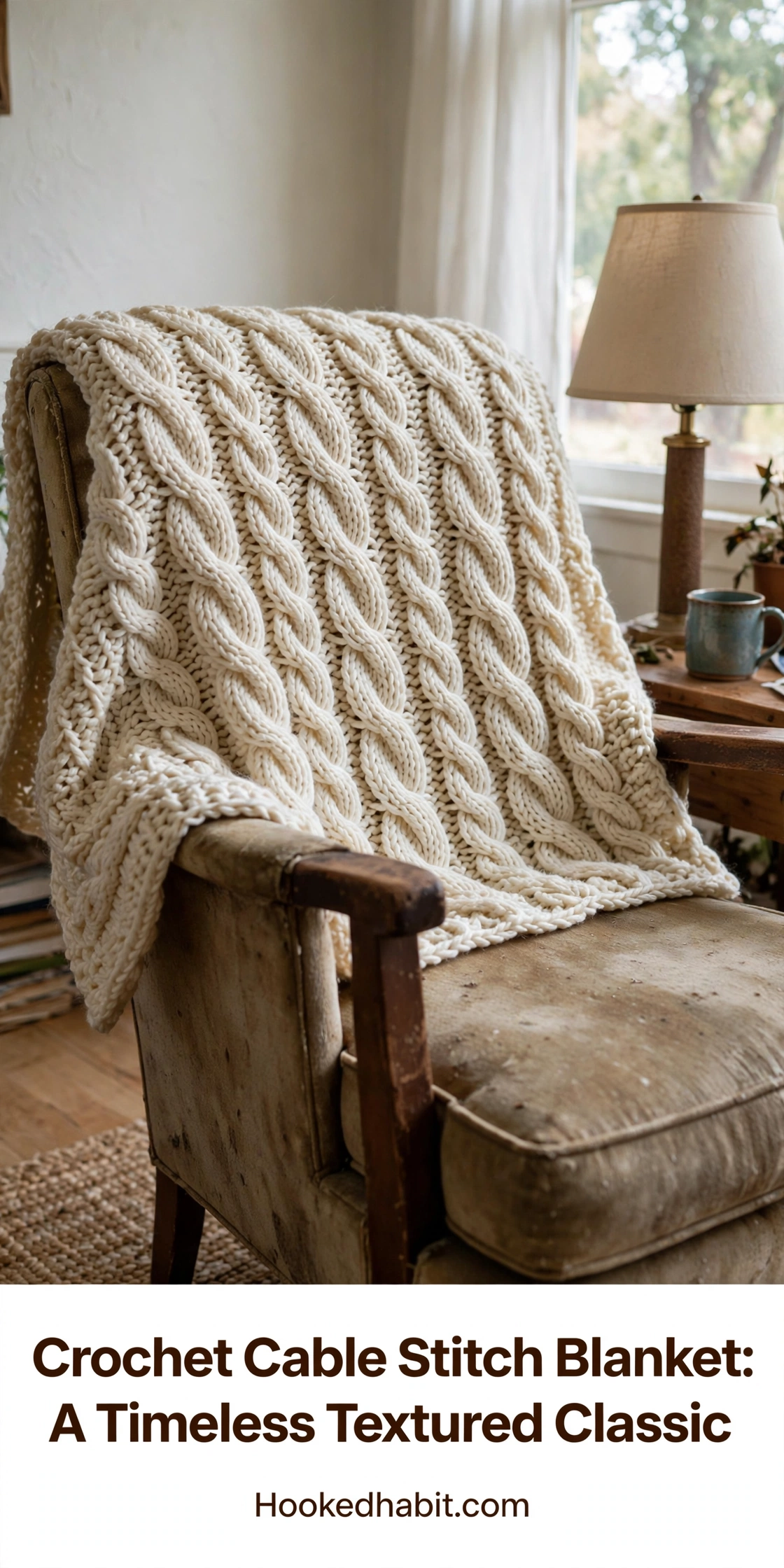
For showing off every twist and cross, you can’t beat a soft cream or ivory — pale, simple yarn lets the cable detail shine at its clearest. But don’t be afraid to go moody: a deep charcoal or a heathered sage gives this same blanket a whole different personality, just as happy in a modern living room as in a cozy cottage bedroom. Let the room it’s going to live in help you pick your colors.
Materials and Tools
For a blanket that’s both beautiful and built to last, reach for a bulky weight yarn or a nice thick worsted in a natural fiber blend — a merino wool or an acrylic-merino mix is perfect, since it blocks well and resists pilling. A smooth, creamy worsted is especially lovely, catching the light along each cable ridge. A 5mm or 6mm hook is the sweet spot, giving your stitches room to breathe while keeping that tight, rope-like definition that makes cables look so handsome. The only other tool you’ll need is a yarn needle for weaving in ends — pick a blunt-tipped one so you don’t split the plies of your finished fabric.
Stitch by Stitch
You only need a handful of stitches to build all that gorgeous texture — here’s the little family that does the work:
SC (Single Crochet) The foundational stitch that forms the flat, dense rows between each raised cable panel, grounding the texture and keeping the fabric even.
DC (Double Crochet) The workhorse of the cable itself, worked in groups to create the tall, crossed columns that define each twist.
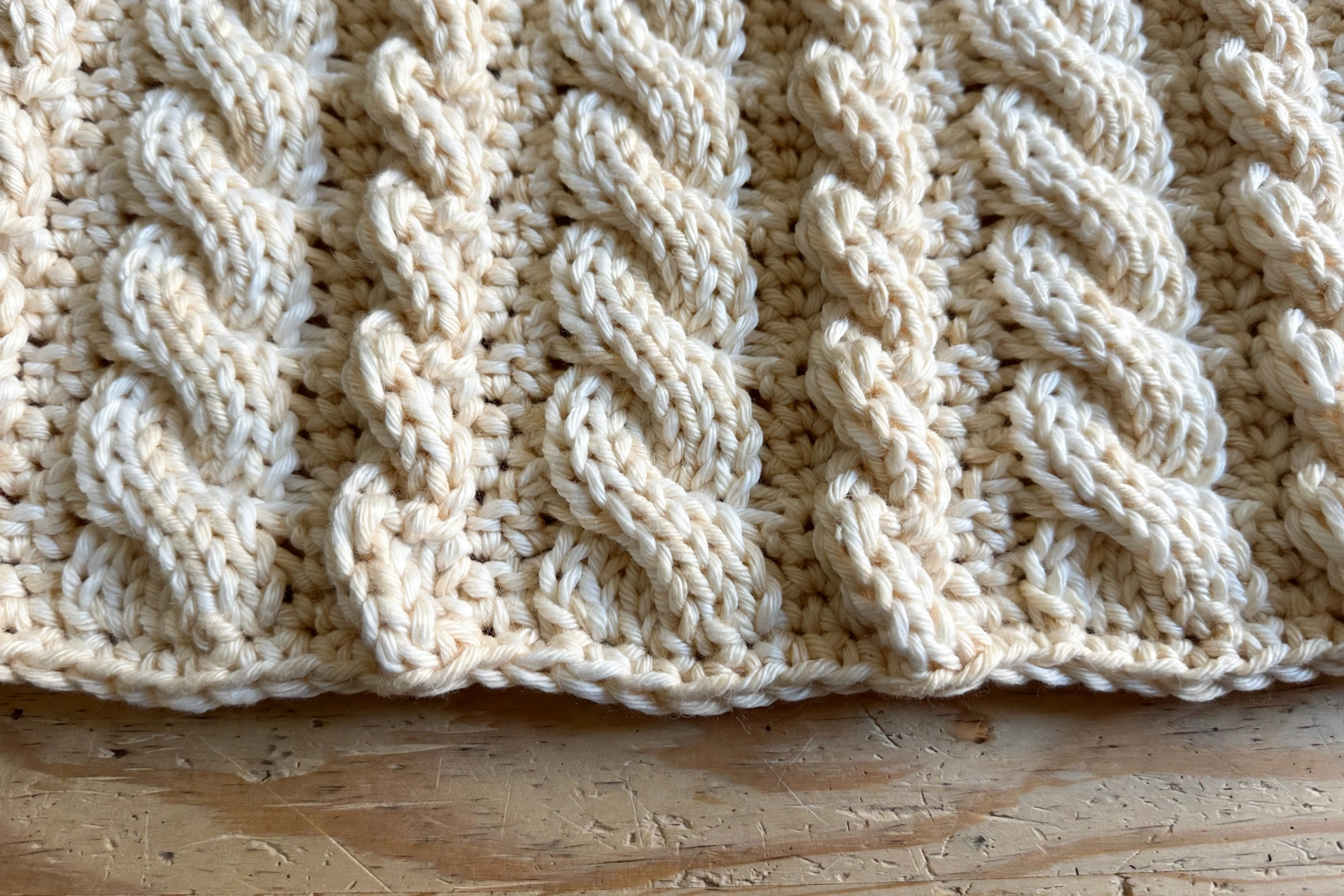
FPdc (Front Post Double Crochet) Worked around the post of the stitch below rather than through the top loops, this is the stitch that pulls the cable forward and gives it its raised, three-dimensional character.
BPdc (Back Post Double Crochet) The counterpart to FPdc, pushing stitches to the back of the fabric to create the valley between each cable ridge.
Once you settle into the rhythm of alternating those post stitches, the whole thing starts to flow — each row echoing the last, almost like a little song for your hands.
Construction
This blanket is worked flat in rows, which makes it one of the simplest constructions for a big project like this. You’ll start with a foundation chain as wide as you’d like your blanket, then build upward row by row — the cable panels just appear on their own as you alternate your front and back post stitches in the right order. The original pattern comes with a video tutorial that walks you through every stage up close, including exact stitch counts and the cable crossings. Want a smaller lap blanket instead of a full throw? Just shorten your starting chain in multiples of the cable repeat, and it scales down beautifully.
Wearing Your Cable Stitch Blanket
Once it’s finished, this blanket won’t stay on the sofa for long. Wrap it around your shoulders on a chilly morning while the coffee brews, toss it in the car for picnics and evening ball games, or fold it into a gift bag for someone who could use something made with love. There’s something so satisfying about finishing a piece with real weight and texture to it.
Washing and Storing Your Cable Stitch Blanket
If you used wool or a wool blend, a gentle hand wash in cool water with a mild wool wash is the kindest treatment. While it’s still damp, give it a light block — you’ll see the cables open up and the stitches settle into their most beautiful, defined shape. Then lay it flat on a clean towel to dry, smoothing the edges into place. Once it’s dry, fold it loosely (no tight creases across those cable ridges) and store it somewhere with a little airflow, like a cotton bag or an open shelf, rather than sealed in plastic. Tuck a small cedar block nearby and your natural fibers will stay happy through every season.
Every blanket like this holds the quiet of the hours you spent on it, and no store-bought throw can ever match that.