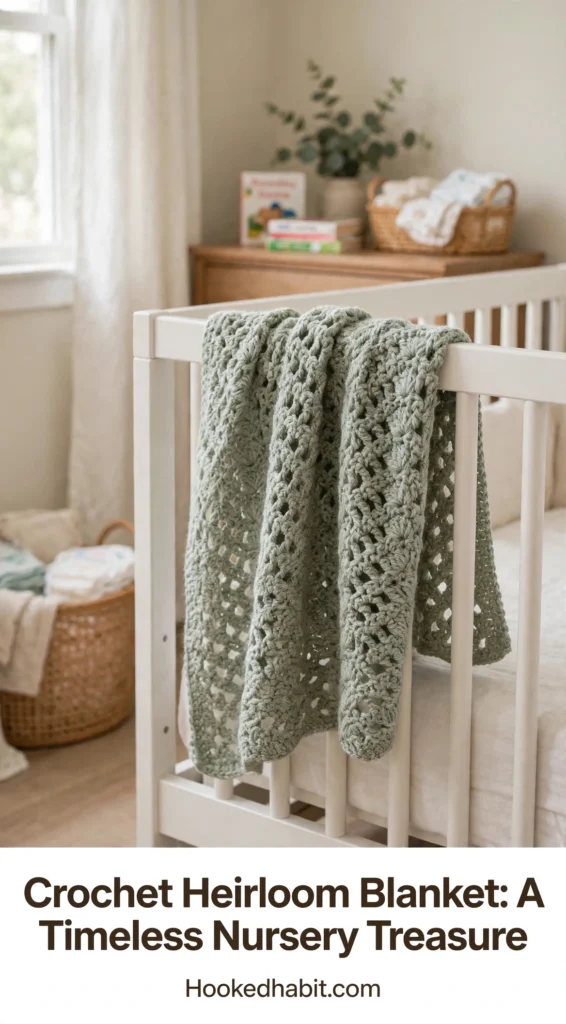
This heirloom blanket is the kind of thing you make to be folded, gifted, and passed forward for generations. Drape it over a nursery crib, wrap it around small shoulders on cool mornings, or lay it across a bed — every version carries your hands in every stitch.
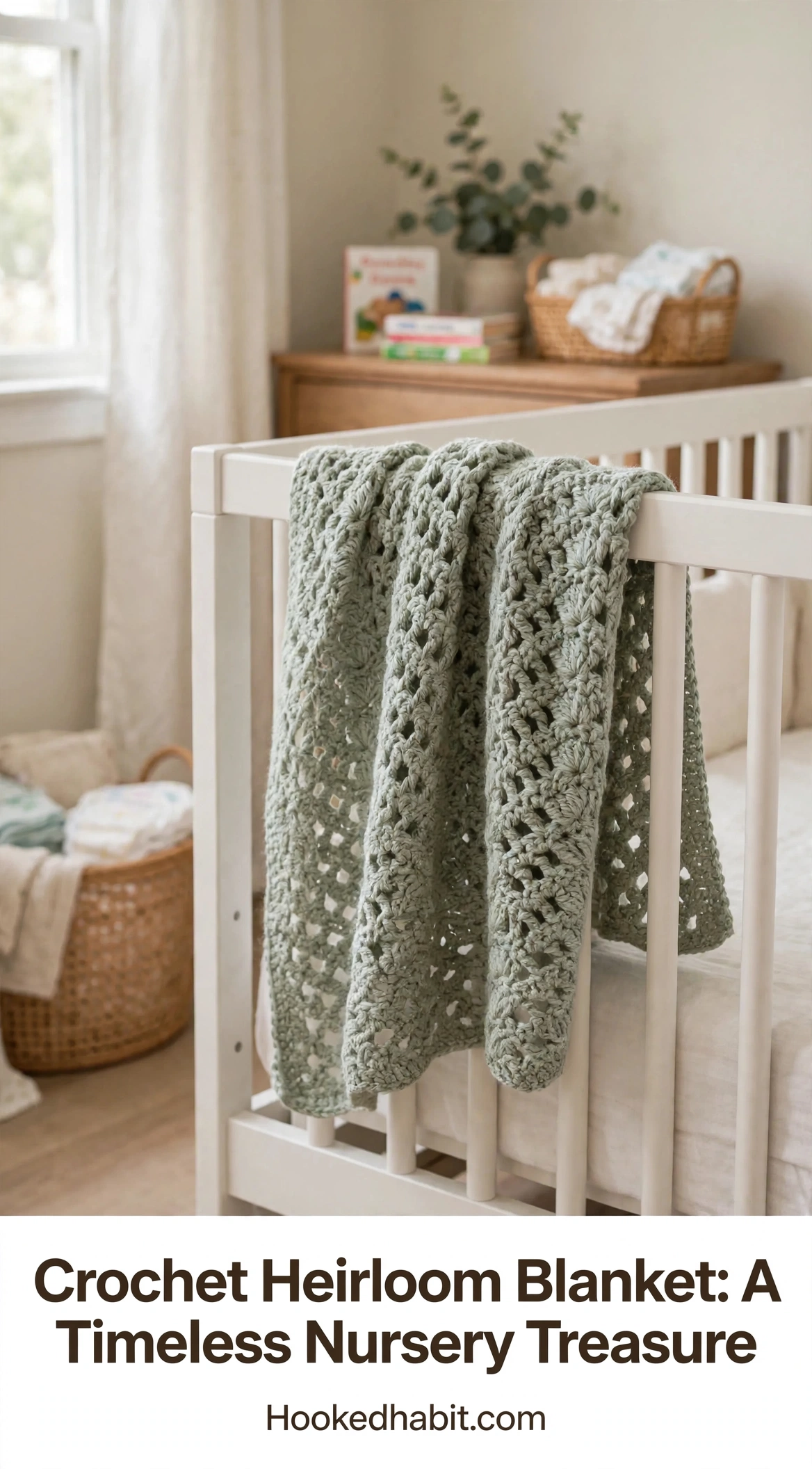
The Heirloom Blanket
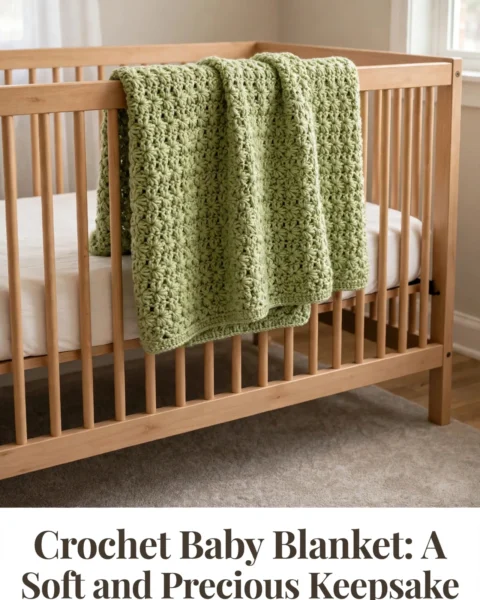
An heirloom blanket feels different the moment you hold it. The lace-like diamond motifs catch the light in a way that looks far more intricate than the stitch count suggests — airy yet structured, delicate yet sturdy enough for daily use. This is a blanket for nurseries, for gift boxes wrapped in tissue paper, for slow afternoons when you want your hands making something that genuinely matters. It has the quiet elegance of something pulled from your grandmother’s cedar chest.
The sage green you see in the reference photos is an inspired choice for this piece. It sits somewhere between muted and botanical — soft enough for a newborn’s room, grounded enough to live on a reading chair for years. If sage feels too quiet for you, consider warm ivory, dusty rose, or a pale butter yellow. Each carries the same whisper of elegance without competing with the stitch texture.
Materials and Tools
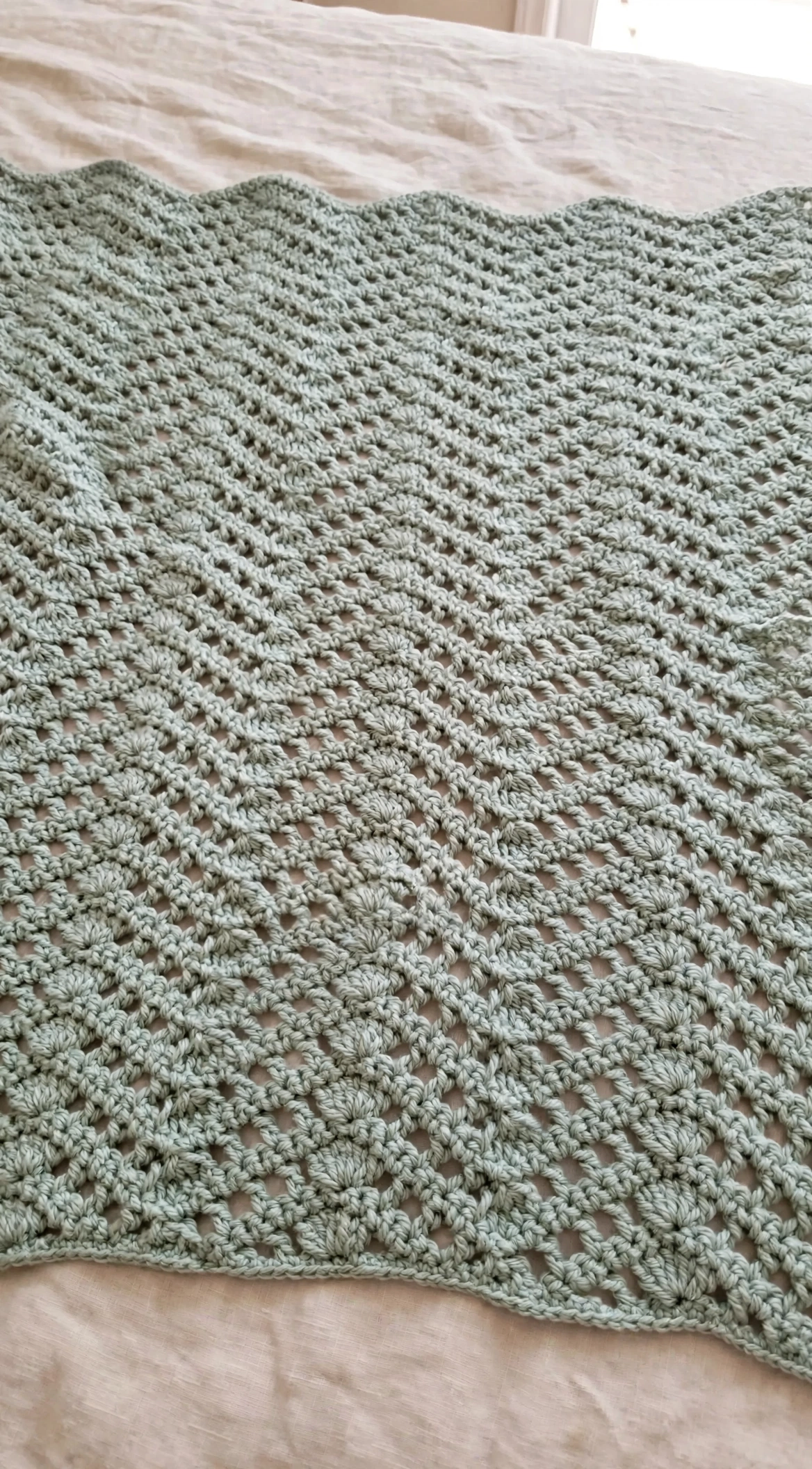
For a blanket with this level of drape and stitch definition, DK weight is the sweet spot. You want a fiber that holds its shape across the open lace spaces without going stiff — a cotton-bamboo blend, a soft merino DK, or a high-quality cotton like Paintbox Simply DK or Drops Safran. The hook shown in the reference images is a Tulip Etimo 6.00mm, slightly larger than the DK standard, and that choice is intentional: working a little looser opens up the diamond mesh and gives that characteristic breathable quality you can see in the spread fabric. A yarn needle for weaving in ends and a set of locking stitch markers to track your repeat boundaries will make everything much smoother.
Stitch by Stitch
This pattern asks for a small, confident stitch vocabulary that repeats in a rhythm you will memorize quickly.
- CH (Chain): The foundation and the connective tissue of the lace sections, used to create the open diamond spaces between clusters.
- SC (Single Crochet): Used at the base and at key anchor points within the pattern to stabilize the structure and keep the edges clean.
- DC (Double Crochet): The main building stitch of each diamond cluster, worked in groups to create the raised, textured sections of the pattern.
- CH-SP (Chain Space): The open loops formed by chaining between stitches, which create the airy mesh windows that define the heirloom look.
Once you find the rhythm of cluster, chain, anchor, repeat, the pattern turns genuinely meditative. Your hands learn the sequence before your eyes do, and whole rows pass in a comfortable, unhurried flow.
Construction
The blanket is worked flat in rows, which makes it very approachable if working in the round is not your favorite. The stitch repeat stays consistent once you finish the first full pattern row — same logic row after row, with only small adjustments at the turning points. Since it is one flat panel, there is no seaming at all. To scale up for a full crib blanket versus a smaller stroller wrap, just adjust your starting chain in multiples of the pattern repeat.
Wearing Your Heirloom Blanket
Drape it across a wicker moses basket lined with white linen and it becomes an instant nursery centerpiece. Fold it into a gift box with a cedar sachet and a handwritten note and it becomes one of those baby shower gifts people photograph and keep. In your own home, lay it across the arm of a chair in a reading corner — it will earn its place in the room within a day.
Washing and Storing Your Heirloom Blanket
Once your blanket is complete, wet blocking will transform it. Soak gently in cool water with a little wool wash or baby-safe detergent, press out the excess water without wringing, and pin flat to your blocking mats, coaxing each diamond open to its full shape. Let it dry completely flat before folding — it may take a full day depending on your fiber. For storage, fold loosely and tuck it into a breathable cotton bag rather than a plastic container, especially with a natural fiber, so the fabric can breathe between uses.
Every stitch in this blanket is an act of intention, and the person who receives it will feel that even if they cannot name it. You made something that will outlast the season it was born in — and that is worth every single chain.