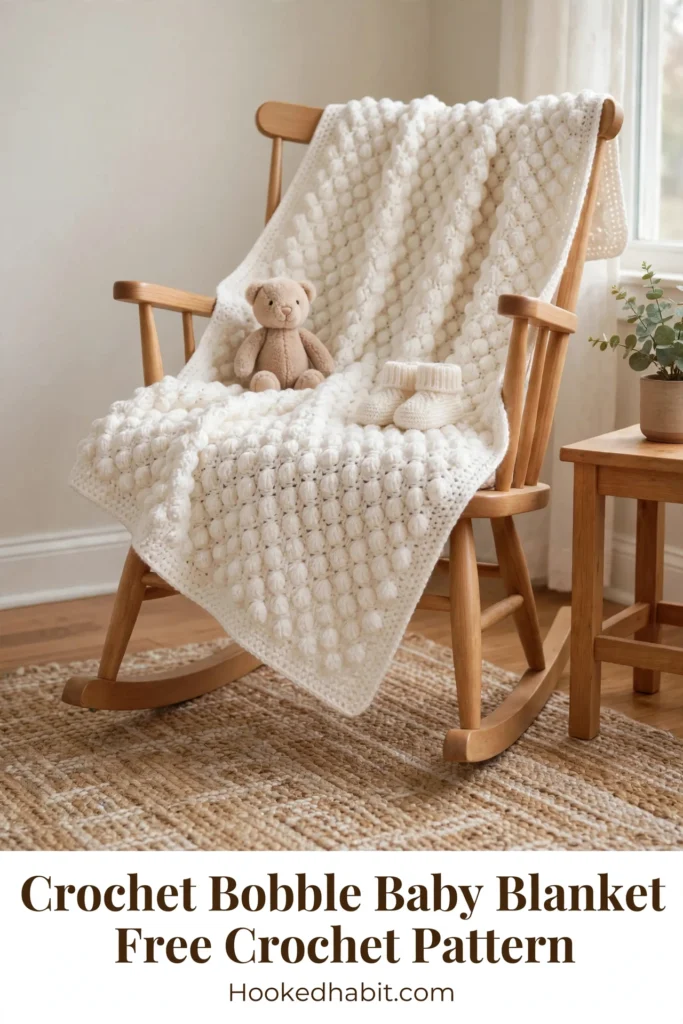
Come learn this cloud-soft Crochet Bobble Baby Blanket with me — it’s the kind of project that makes your hands happy to be busy. Drape it over the nursery crib, tuck it into the pram, or fold it up as a gift so heartfelt it might bring a tear before it’s even unwrapped.
The Bobble Baby Blanket
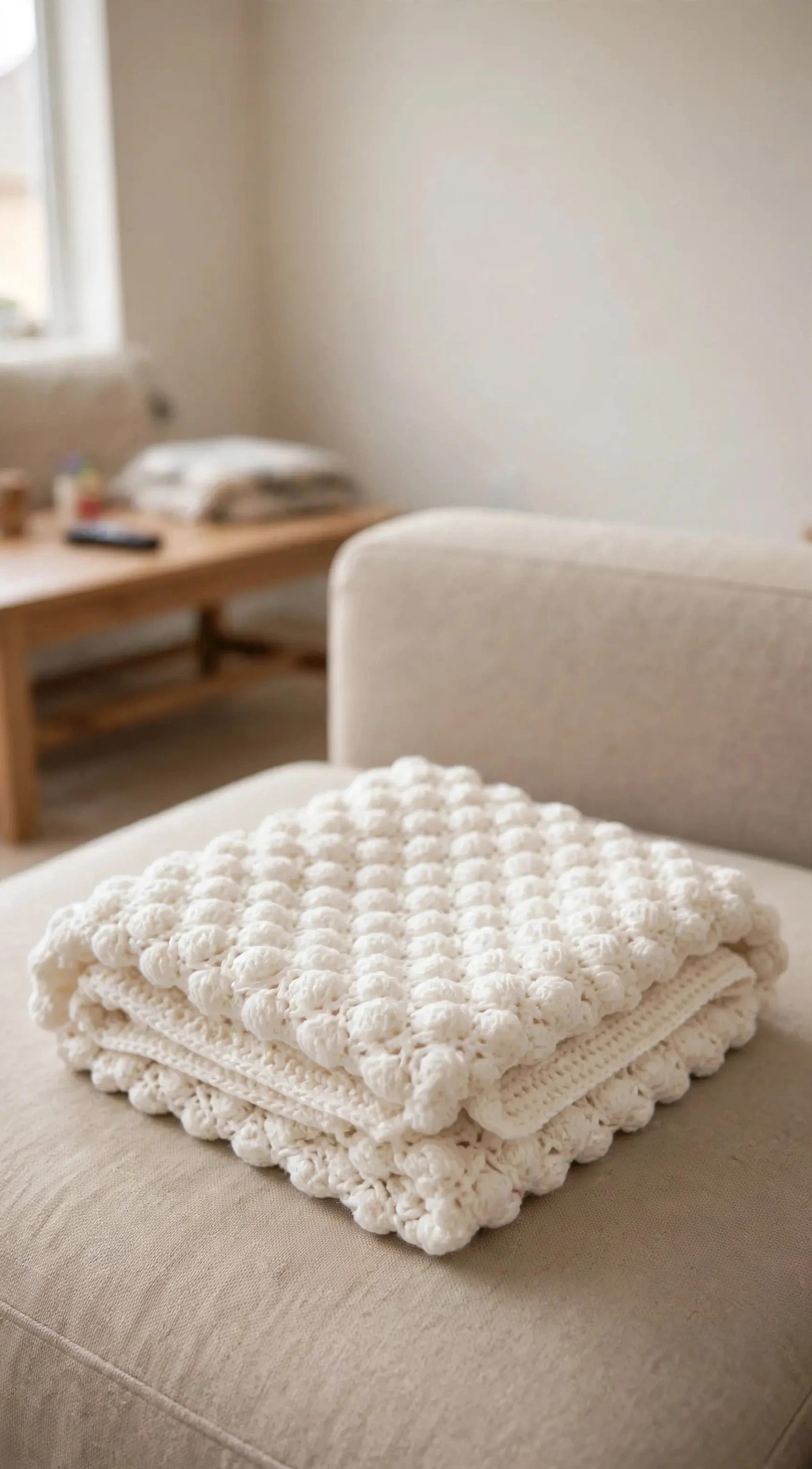
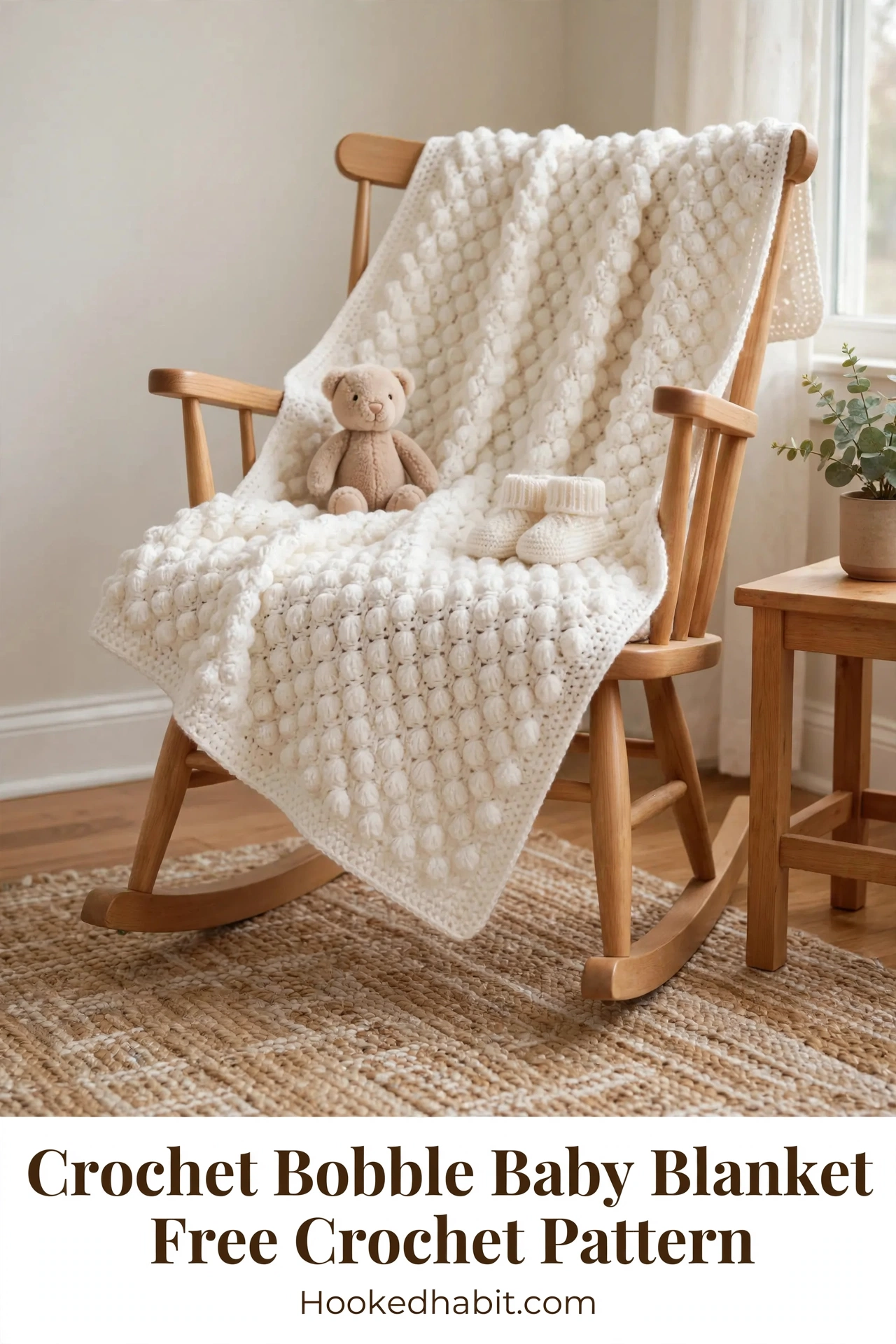
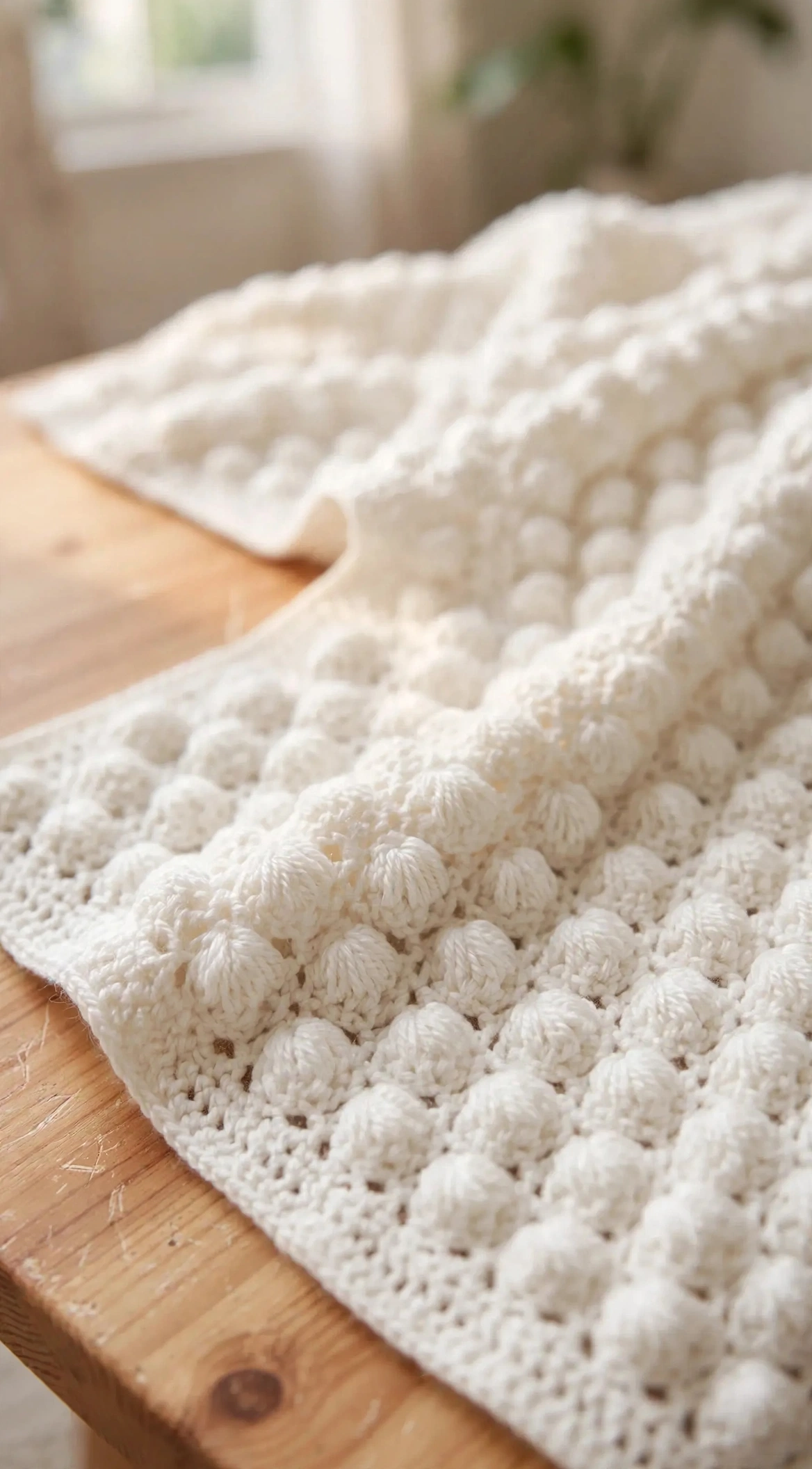
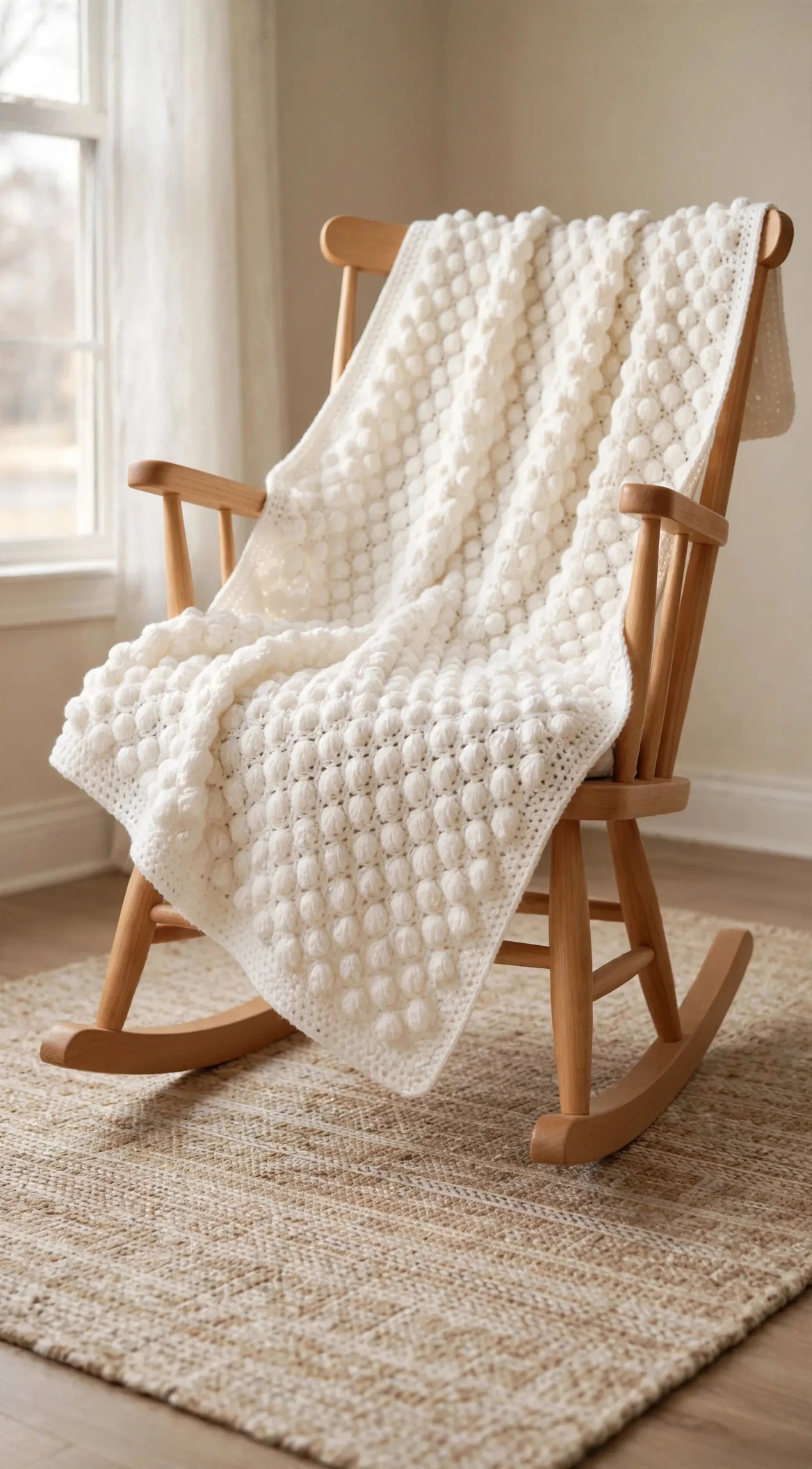
A bobble baby blanket is one of those makes that means so much more than its weight in yarn. The raised bobble clusters drift across the surface in soft diagonal waves, making a texture so plush and dimensional you’ll want to press your cheek to it before any baby ever gets wrapped in it. It’s made for the newest, most precious little arrivals — yet it looks just as lovely folded over the arm of the nursery rocking chair, or gifted at a baby shower tucked in tissue and ribbon. Every single inch speaks of unhurried care — of hands that chose to make something real.
White is the classic choice, and the photos show why — it lets every bobble and shadow speak for itself in soft relief. Soft cream, pale blush, or a hazy sage would be just as elegant, adding a whisper of warmth or personality. And if you’re making it as a gift without knowing the nursery colors, white or ivory will never steer you wrong.
Materials and Tools
For a blanket with this kind of loft and structure, pick up a DK weight yarn in a soft acrylic or cotton-acrylic blend — something machine washable and gentle against newborn skin. A 4mm crochet hook hits the sweet spot here, giving you tension firm enough to hold the bobbles proud without squishing them or pulling the fabric too stiff. Look for yarns labeled anti-pilling, because baby blankets get washed more than almost anything else you’ll ever make. And keep a yarn needle handy for weaving in ends at the finish line — a blunt-tipped one is worth its weight in gold for not splitting those soft plied strands.
Stitch by Stitch
This pattern uses a small, satisfying handful of stitches that layer together like a dream.
- CH (Chain): The foundation of every row, worked loosely so the blanket edge stays relaxed and even.
- SC (Single Crochet): Used to anchor and close the bobble clusters, keeping the diagonal lines crisp and defined.
- DC (Double Crochet): The workhorse stitch that fills the body of each row, creating the elongated structure between the raised sections.
- MB (Make Bobble): Typically worked as five DC stitches all drawn together into one point, this is the stitch that creates the signature puffed texture across the whole blanket.
Once you settle into the rhythm of placing your bobbles and coming back to your DC rows, this pattern takes on a quiet, meditative pull — the kind where an hour slips by before you notice.
Construction
This blanket is worked flat in rows, which makes it wonderfully approachable if you’re moving from beginner toward intermediate crochet. That diagonal wave effect doesn’t come from tricky shaping at all — it’s simply the offset placement of bobble clusters from row to row, and it’s such a satisfying little trick once you see it click. The full technique, including turning your rows and positioning each bobble just right, is shown clearly in the accompanying video tutorial, which you can follow at your own cozy pace. To change the size, just adjust your starting chain in multiples that fit the stitch repeat — easy to scale from a little lovey square all the way up to a generous pram blanket.
Wearing Your Bobble Baby Blanket
Drape it across a neutral linen Moses basket and the bobbles do all the decorating — nothing else needed in the picture. In the pram it works as a swaddle-weight layer for cooler evenings; folded into quarters, it becomes a padded tummy-time mat on a soft floor. Fair warning: the closer you get to finishing, the stronger the urge to cast on a second one right away.
Washing and Storing Your Bobble Baby Blanket
Since this is a baby blanket, gentle machine washing on a cool cycle is the most practical way to care for it — especially if you’ve chosen a good machine-washable DK acrylic or blend. Wash it inside out to protect the raised bobbles, keeping those clusters full and rounded through wash after wash. Afterward, reshape it gently by hand and lay it flat to dry; that preserves both the size and the loft so much better than hanging ever could. Between uses, fold it loosely rather than squishing it tight, so the bobbles don’t get flattened over time.